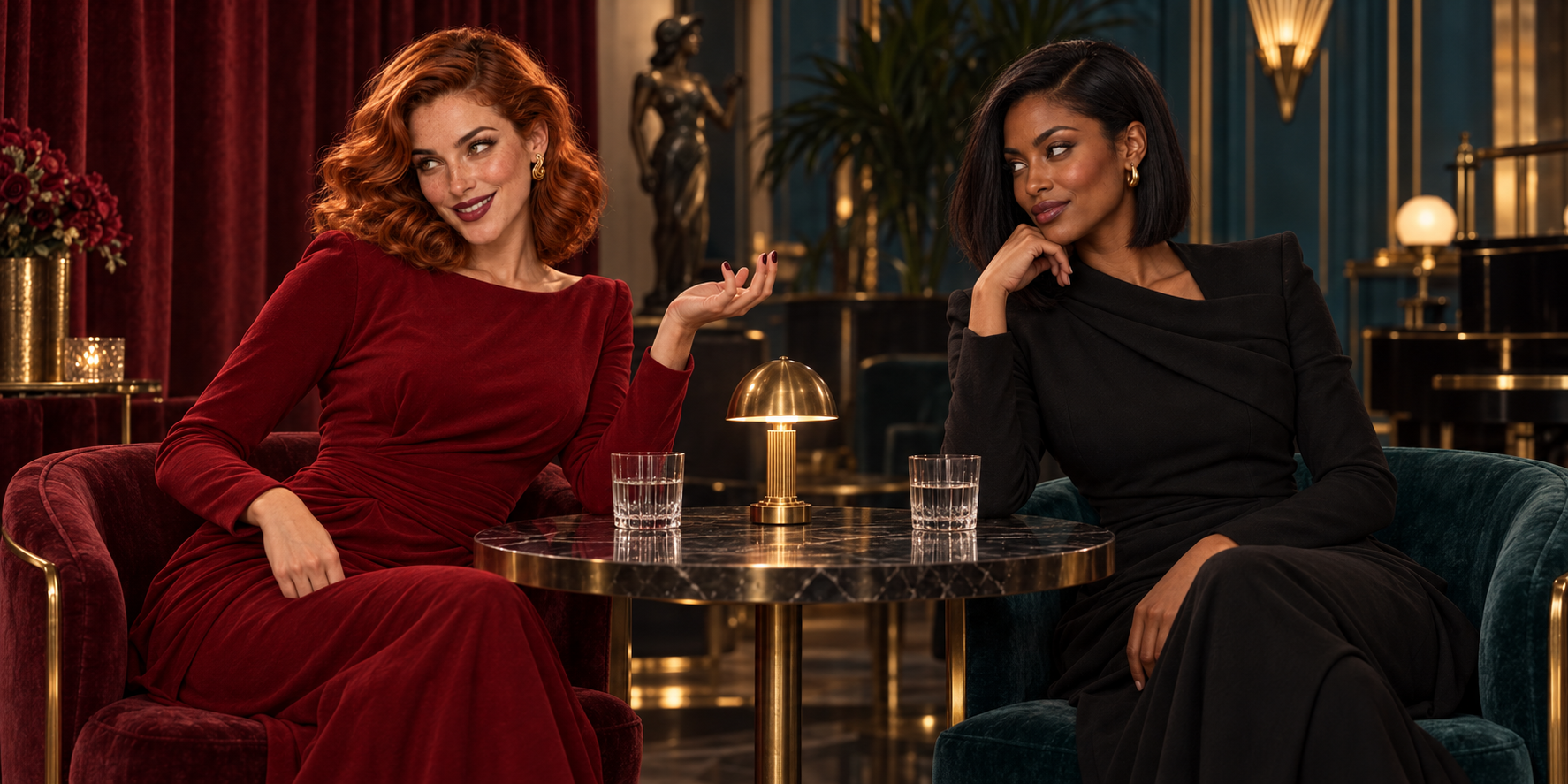
Vivienne had not seen either drawing. That ought to have limited her opinions, though she acknowledged it chiefly as magnificent scope for being wrong. Vera preferred looking at the first portrait; the second had been submitted. Vivienne was willing to leave the first its better jaw. What she wanted to know was where Vera's eyes went when she looked at it: towards the mouth she had held in position, or the line beneath her cheek. She asked before arriving with a theory that might spoil the lighting. Neither drawing needed to accompany Vera to supper tomorrow.
The eyes were what pleased Vera. She had angled the mirror so that the woman on the paper looked past its eventual holder. The smile had never convinced her, even while she was making it, but the face had somewhere else to look. The submitted portrait looked directly out, laughing; it seemed to invite everyone who saw it to join in. Vera called that technically successful and rather crowded. She had enjoyed making the first drawing. She did not want that pleasant evening converted into evidence that she was afraid of happiness.
Vivienne's proposed offence was narrower and considerably less solemn: a woman made of charcoal had apparently obtained Vera's attention by looking elsewhere. She could admire the result without treating its averted gaze as a personal dismissal. Still, the choice of angle interested her. Had something beside the mirror belonged in the picture? Had Vera turned it to avoid meeting her own stare? Those explanations would give the same arrangement rather different meanings. Vivienne could ask, but the drawing remained unseen, and Vera alone could say what had happened before it.
Her drawing hand had been the difficulty. In the reflection it appeared below her chin, an impatient examiner interfering with the face she wanted to study. Turning the mirror removed it. With the window on her left, she could see the side of her face without that interruption. Then an interruption arrived from elsewhere: someone opposite was attempting to pass a large plant through a small window. Vera stopped to watch. She did not draw the plant. She forgot the smile, and afterwards put it back. It was that restoration, rather than the mirror's angle, that troubled her.
To Vivienne, putting the smile back was a reasonable thing for someone making a drawing to do. A plant did not acquire artistic authority merely by becoming inconvenient. She might replace an earring after answering a door without declaring the evening fraudulent. Yet Vera had valued the uneven mouth in the other portrait, and her defence of this one had become surprisingly fierce. Vivienne asked when the preference began. Had Vera liked the first face while making it, or only after the laughing portrait received approval? A compliment could conceivably make every other expression feel unwelcome. It was a possibility, offered into the space where Vivienne still had no picture to examine.
Vera had preferred it before. Nobody had seen the first portrait. The course had accepted the second without offering a grand explanation of her character; the imagined crowd was largely her own contribution. The simpler account was also the one she had avoided saying. She had liked how she looked. Alone at her desk, she had worn earrings, then enlarged one in the drawing because she enjoyed its shape against her neck. She had sent the other portrait because she thought it better. Calling that choice a sacrifice had lent it an importance it did not deserve. Her pleasure in the first had existed before any judgement of the second.
An enlarged earring was a scandal Vivienne could appreciate: at least its proportions offered something useful to discuss. She liked that Vera had dressed for an evening without a guest. She also recognised her own contribution to the imaginary gathering around the laughing face. Vera had already said she enjoyed drawing the other one, while Vivienne had helped construct an argument about compliments driving other faces away. If the drawings were eventually shown, she might prefer either. She would bring no prize ribbon. What she wanted now was to hear Vera admit she liked looking beautiful, without requiring the jaw to demonstrate some educational purpose.
Vera said it plainly. She had liked looking beautiful; the jaw could be relieved of its duties. But the admission did not turn tomorrow's supper into an exhibition. She would bring no drawings. She wanted supper before she began following Vivienne's eyes across a sheet of paper. Perhaps she would wear the earrings, if she still liked them while dressing. Then she disclosed something else about the first portrait: beneath it she had written a title and rubbed it out before putting the sheet away. The words might still be legible. She had not supplied them, or decided whether she wanted Vivienne to read them. After all their attention to where the drawn woman looked, there remained something below her face that Vera was still deciding whether to show.